
Wealth Management Services in India for High Returns: A Smarter Approach to Long Term Wealth
Updated on 07-09-2026
Building wealth is not simply about choosing an investment that has delivered high returns in the past. Successful wealth creation requires a structured approach that considers your financial goals, investment horizon, risk tolerance, diversification, taxes, liquidity, and changing financial requirements.
For investors searching for wealth management services in India for high returns, the focus should be on creating a strategy that aims for long-term growth while keeping investment risks under consideration. GIIS Financial provides financial planning, investment planning, mutual fund solutions, wealth management, and related financial services to help individuals make more structured financial decisions.
What Are Wealth Management Services?
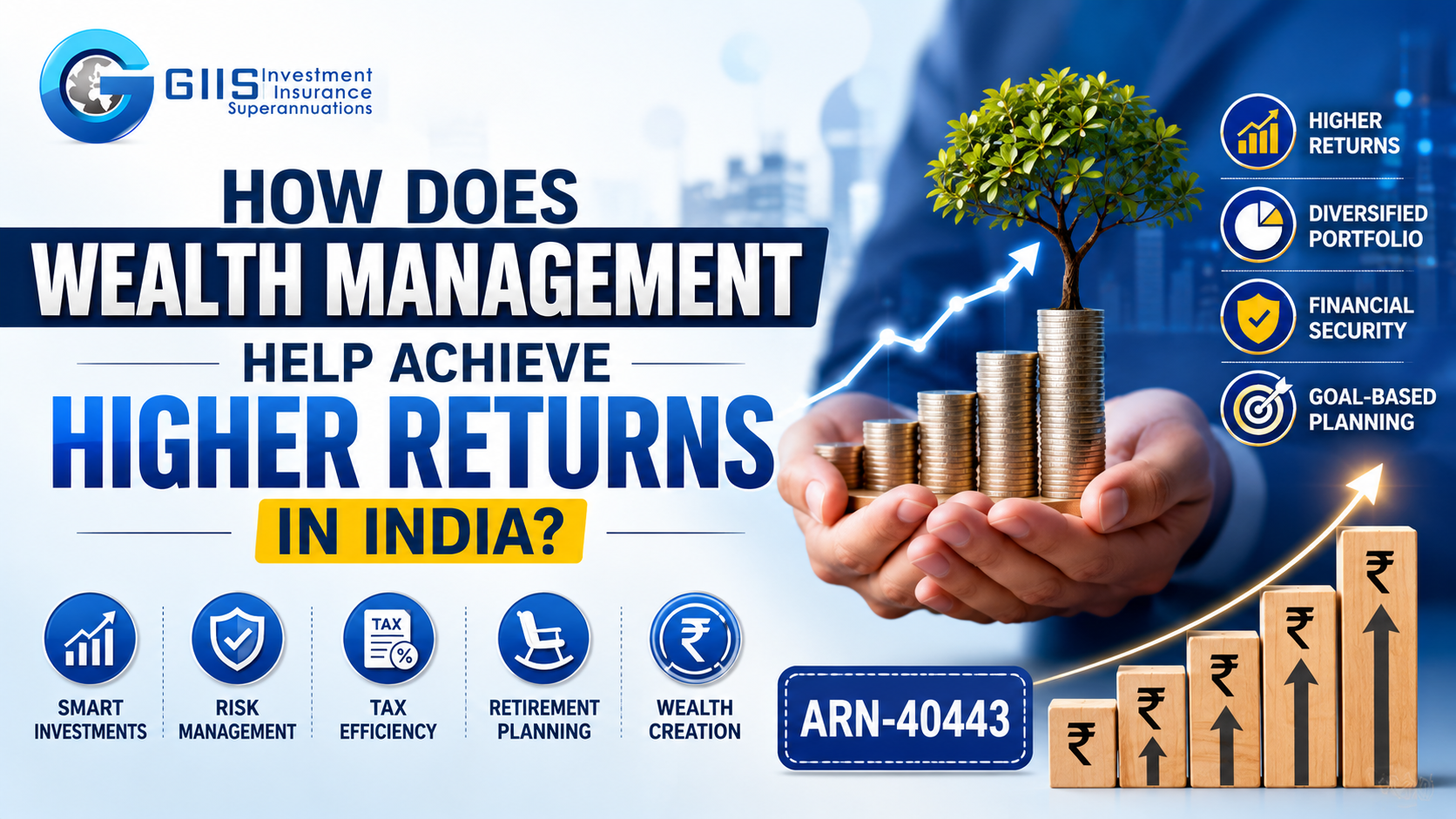
Wealth management is a comprehensive approach to managing and growing your financial assets. Instead of looking at one investment product separately, wealth management considers your overall financial position and future objectives.
Depending on your requirements, wealth management may include:
- Investment planning
- Mutual fund investments
- SIP planning
- Retirement planning
- Tax-efficient investment planning
- Portfolio diversification
- Goal-based financial planning
- Periodic investment reviews
- Risk management
The purpose is to create a financial strategy that connects your investments with your personal goals.
Can Wealth Management Provide High Returns?
Wealth management cannot guarantee high returns because investment performance depends on market conditions and the type of investments selected.
However, a well-structured strategy can help investors pursue long-term growth by selecting investments according to their goals and risk profile. For example, equity-oriented mutual funds generally seek long-term growth but can experience significant short-term volatility. Hybrid funds combine equity and debt and can provide a different balance between growth and stability.
Therefore, when searching for wealth management services in India for high returns, investors should focus on realistic long-term wealth creation rather than guaranteed return promises.
Why Is Diversification Important for Wealth Creation?
Putting all your money into one investment or asset class can expose your portfolio to unnecessary concentration risk.
Diversification means spreading investments across different securities or asset classes. Mutual funds can provide diversification by investing across multiple securities and, depending on the scheme, across asset classes such as equity, debt, or gold.
A diversified investment strategy can help manage portfolio risk while keeping long-term growth opportunities in consideration.
How Can Mutual Funds Support Long-Term Wealth Creation?
Mutual funds are commonly used for long-term investment because they provide access to professionally managed portfolios and different investment categories.
Equity mutual funds can be considered by investors seeking long-term capital growth and who are comfortable with higher market fluctuations. Hybrid mutual funds combine equity and debt and may suit investors looking for a different balance between growth and stability.
The appropriate choice depends on factors such as:
- Investment objective
- Investment duration
- Risk tolerance
- Current financial position
- Liquidity requirements
- Existing investments
Past performance should not be treated as a guarantee of future returns.
SIP and Wealth Creation
SIPs can help investors develop a disciplined investment habit by investing a predetermined amount at regular intervals.
For individuals building long-term wealth, SIPs can be incorporated into a broader financial plan rather than being treated as a standalone investment decision.
For example, an investor may use SIPs for long-term goals such as retirement, children's education, or building a future financial corpus. The amount and investment strategy should be reviewed according to changing income, financial goals, and risk capacity.
Wealth Management for Different Financial Goals
Every investor may have a different definition of wealth.
For one person, wealth may mean building a retirement corpus. For another, it may mean purchasing a home, funding children's education, creating passive income, or achieving financial independence.
This is why wealth management should begin with clearly defined financial goals.
A goal-based approach can help determine:
How much should I invest?
The required investment amount depends on the financial goal, time horizon, and expected investment growth.
Where should I invest?
The choice depends on risk tolerance, liquidity requirements, and the purpose of the investment.
How long should I stay invested?
Long-term goals generally provide more time to manage market fluctuations, although investment risk still remains.
How GIIS Financial Can Help With Wealth Management
GIIS Financial provides financial solutions related to investment planning, mutual funds, wealth management, financial planning, and other investment requirements.
For investors looking for wealth management services in India for high returns, the focus should be on creating a personalised financial strategy rather than selecting investments solely because they have generated high historical returns.
GIIS Financial can help investors approach their investment requirements through structured financial planning, goal-based investment decisions, portfolio diversification, and regular review of financial objectives.
What Should You Check Before Choosing Wealth Management Services?
Before selecting a wealth management service, investors should understand what services are provided and how the investment process works.
Important areas to consider include:
- Investment approach
- Risk assessment
- Diversification strategy
- Available investment products
- Investment costs and charges
- Portfolio review process
- Transparency of transactions
- Alignment with financial goals
Investors should also understand the risk associated with every investment before committing their money.
Frequently Asked Questions
What are wealth management services in India?
Wealth management services provide a structured approach to managing investments, savings, financial goals, risk, and long-term wealth creation.
Can wealth management guarantee high returns?
No. Market-linked investments cannot guarantee high returns. Wealth management focuses on creating a strategy based on financial goals, risk tolerance, diversification, and investment horizon.
Which investments can help create long-term wealth?
Depending on an investor's goals and risk profile, options may include mutual funds, SIPs, equity-oriented investments, debt-oriented investments, hybrid funds, and other suitable financial products.
Is diversification important in wealth management?
Yes. Diversification can help spread investment exposure across different securities or asset classes and may reduce concentration risk.
Is wealth management only for high-net-worth individuals?
No. A structured financial plan can be useful for people at different stages of their financial journey. The strategy and investment choices should be based on the individual's financial goals, income, assets, liabilities, and risk tolerance.
Conclusion
Wealth creation is a long-term process that requires more than searching for the investment with the highest past return. A structured approach can combine financial planning, diversification, mutual funds, SIPs, retirement planning, and periodic portfolio reviews according to individual objectives.
For individuals searching for wealth management services in India for high returns, the better approach is to focus on sustainable long-term wealth creation and risk-aware investment planning rather than guaranteed-return promises.
GIIS Financial can help individuals and families approach their financial goals through structured investment and wealth management solutions designed around their individual requirements.
Share On
















0
Comment